
If you or someone you care about is navigating opioid addiction, you’ve likely encountered the question of whether a 12-step program is worth pursuing, or what that even means. Do 12-step programs work for opioid addiction? Alcoholics Anonymous built its model around alcoholism, and Narcotics Anonymous has extended it to other substances, but questions remain about how well the framework translates to opioid use disorder specifically. This article looks honestly at what research suggests, what 12-step programs offer, and where clinical care fits into the picture for drug addiction.
Key Takeaways
- Research suggests that sustained engagement with 12-step or other mutual-help programs may support long-term recovery for some individuals, including those dealing with opioid addiction, especially when combined with clinical care
- AA and Narcotics Anonymous share the same core model, but Narcotics Anonymous was developed to support people recovering from a wide range of substances, including opioids
- 12-step programs offer community, accountability, and a spiritual framework, but they are not a replacement for clinical care.
- Early recovery from opioid addiction often benefits from a combination of medical supervision, addiction treatment, and peer support through recovery groups
- The potential benefits of recovery groups are generally associated with sustained engagement rather than short-term participation
What 12-Step Programs Actually Offer
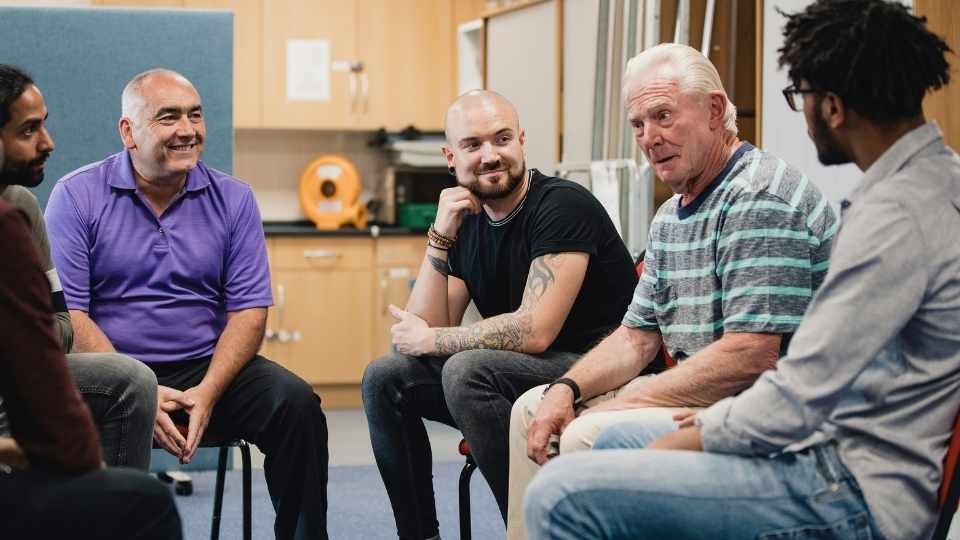
Before asking whether 12-step programs work, it helps to be clear about what they are designed to do. A 12-step program is not a clinical intervention. It does not prescribe medication, provide medical supervision, or offer structured therapy. What it provides is a peer community organized around shared experience, a set of guiding principles for examining and changing behavior, and an ongoing support structure that many members describe as helpful in maintaining sobriety.
Alcoholics Anonymous developed the model around alcoholism, and its AA model has since been adapted by Narcotics Anonymous and other recovery organizations. The core framework, admitting loss of control, building a spiritual foundation, making amends, and supporting others in recovery, has been applied across substances because many addictive disorders share patterns such as compulsive use, loss of control, and continued use despite negative consequences.
Understanding what these programs provide, and what they do not, is key to determining whether they are the right fit for a given person’s recovery process.
What the Research Suggests
Studies examining whether AA works have produced mixed but generally supportive findings, particularly for alcohol use disorder. Research indicates that individuals who engage consistently with AA or other mutual-help groups over time may experience improved outcomes, particularly for sustained abstinence, compared to those who do not participate in peer-support programs, although results vary and depend heavily on sustained engagement.
For opioid addiction specifically, the picture is more nuanced. Opioid use disorder often involves significant physical dependence and overdose risk, which frequently require medical intervention, including medication-assisted treatment, that 12-step programs are not designed to provide. The question is less whether 12-step programs work and more how they can contribute alongside the clinical care that opioid recovery often requires.
The AA Model and Opioid Use Disorder
The AA model was originally built around alcoholism, but has been adapted to other forms of addiction through programs such as Narcotics Anonymous. These programs apply the same twelve steps and traditions to a broader range of substances, including opioids.
Many people in recovery from opioid addiction attend Narcotics Anonymous and sometimes AA meetings as well, depending on availability and personal preference. Meetings are widely available in many communities and online, although access can vary depending on location.
The value of these programs often lies in the shared experience, peer support, and structured approach to personal change rather than in the specific substance being addressed.
Higher Power and Spiritual Awakening in Opioid Recovery

One dimension of the 12-step model that many members describe as meaningful is the spiritual framework. The steps encourage a spiritual awakening, not necessarily tied to any specific religion, but often described as a shift in perspective that can support recovery.
For some individuals, especially those whose opioid use is connected to emotional pain or loss of meaning, developing a sense of purpose, connection, or belief in something beyond oneself can be helpful. Others may find the spiritual language less accessible, and it is important to acknowledge that this aspect of the program does not work for everyone.
AA and Narcotics Anonymous both emphasize that the concept of a higher power is self-defined and does not require adherence to any particular religion.
Where Clinical Care Fits
Opioid addiction has a strong physiological component that makes medical care especially important. While often not as intense as some other substances, opioid withdrawal can be physically severe, and relapse after a period of abstinence carries a high risk of overdose due to reduced tolerance.
Clinical care, including medically supervised withdrawal management, medication-assisted treatment, and evidence-based therapies, addresses these risks in ways that peer support programs alone cannot.
For many individuals, a combined approach works best. Clinical care can help stabilize early recovery, while 12-step programs and other recovery groups provide ongoing peer support and accountability.
Education plays an important role here as well. When patients, families, and clinicians understand what 12-step programs offer and what they do not, it becomes easier to integrate them into a broader recovery plan.
- Medication-assisted treatment can reduce cravings and withdrawal symptoms, supporting engagement in recovery activities
- Clinical care can address co-occurring mental health conditions when treatment is integrated
- Recovery groups provide ongoing peer support that can continue after formal treatment ends
Comparing Recovery Approaches
| Approach | What It Addresses | Limitations |
|---|---|---|
| 12-Step Programs | Community, accountability, spiritual growth | Not a clinical intervention |
| Medication-Assisted Treatment | Physical dependence, cravings | Requires medical supervision |
| Evidence-Based Therapy | Behavioral patterns, mental health | May not provide long-term peer community |
| Combined Approach | Multiple dimensions of recovery | Requires coordination across services |
More Options: SMART Recovery and Other Approaches
For individuals who find the spiritual language of 12-step programs a barrier, SMART Recovery offers a secular alternative built around cognitive behavioral principles. SMART Recovery does not use a higher power framework and focuses more explicitly on skills and self-management.
SMART Recovery and 12-step programs are not mutually exclusive. Some individuals attend both, combining peer support with skills-based approaches. The goal is not to find a single correct method but to build a recovery process that fits an individual’s needs and preferences.
What Sustained Engagement Actually Looks Like
One of the more consistent findings across research on mutual-help groups is that benefits are more likely with sustained engagement than with brief participation. Attending a few meetings without continued involvement tends to provide limited benefit.
Consistent attendance, building relationships within the group, and active participation, such as working with a sponsor or engaging in service, are often described by participants as important parts of their recovery experience.
For individuals in early recovery from opioid addiction, this means that 12-step programs are most likely to contribute when used consistently and alongside appropriate clinical care.
The Role of Emotional Support in Opioid Recovery
Opioid addiction often develops in the context of emotional stress, trauma, or co-occurring mental health conditions. The practices encouraged in 12-step programs, such as self-reflection, making amends, and building supportive relationships, can help address some of these emotional dimensions.
Medication and clinical care address the biological aspects of addiction, while peer support programs can help provide meaning, connection, and ongoing support. Families may also benefit when their loved one has access to a recovery community, as it can provide additional structure and guidance.
FAQs About 12-Step Programs and Opioid Addiction
Can I attend Narcotics Anonymous if I am on medication-assisted treatment?
Narcotics Anonymous literature and individual meetings vary in their approach to medication-assisted treatment. Some meetings are welcoming of participants using prescribed medication as part of recovery, while others may hold more traditional views. It may take attending multiple meetings to find a group that aligns with your situation.
How long should I attend meetings before expecting results?
There is no defined timeline for results. Benefits from recovery groups are generally linked to sustained engagement rather than short-term attendance. Trust and connection build gradually, and many people describe a turning point only after consistent participation over weeks or months. Showing up regularly, even when progress feels slow, is often what creates meaningful change.
Are 12-step programs enough on their own for opioid addiction?
For many individuals, especially those with significant physical dependence, 12-step programs alone may not be sufficient. Opioid addiction frequently requires medical support, including medication-assisted treatment with buprenorphine or methadone, alongside behavioral and peer support. A combined approach addressing physical, psychological, and social needs tends to produce more comprehensive and sustainable recovery outcomes than any single intervention alone.
A Proven Path Forward
Do 12-step programs work for opioid addiction? The honest answer is that they can be a meaningful part of recovery for many individuals, particularly when combined with appropriate clinical care and sustained engagement over time. They are not a standalone solution for opioid use disorder, but for many people, the community, accountability, and structure they provide can support long-term recovery.
Into Action Recovery Centre for men offers a treatment approach that combines 12-step principles with clinical care in a structured environment. If you or a loved one is navigating opioid addiction, exploring programs that integrate medical treatment, therapy, and peer support can help build a recovery process that is both practical and sustainable.