
When someone you love is struggling with addiction, it can feel like you’ve run out of options. You may have tried talking, pleading, setting boundaries, or stepping back, only to feel stuck and unsure what actually helps.
Community Reinforcement and Family Training (CRAFT) offers a different path. It is a structured, skills-based, family-focused approach that teaches concerned family members and other close supports how to respond in ways that can increase the chances a loved one engages in treatment. It is also designed to improve the well-being of the family member, not just the person using substances.
Rather than relying on confrontation, ultimatums, or waiting for someone to “hit rock bottom,” CRAFT helps people use practical behavioral strategies at home, with guidance and consistency. It can be a critical tool to get people into necessary inpatient treatment.
Quick Takeaways
- CRAFT is a behavioral, family-focused intervention designed for concerned significant others, including spouses, parents, partners, and close family members of people with substance use disorders.
- It uses positive reinforcement, communication skills, and consequence-setting to help encourage a loved one to engage in treatment, without confrontation or ultimatums.
- Research suggests CRAFT can be effective in helping treatment-resistant individuals move toward care, especially in comparison with some older confrontation-based or detachment-focused approaches.
- CRAFT also prioritizes the well-being and quality of life of the family member.
- The approach is grounded in behavioral psychology and operant conditioning and draws from the broader Community Reinforcement Approach (CRA).
What Is CRAFT and Where Did It Come From?
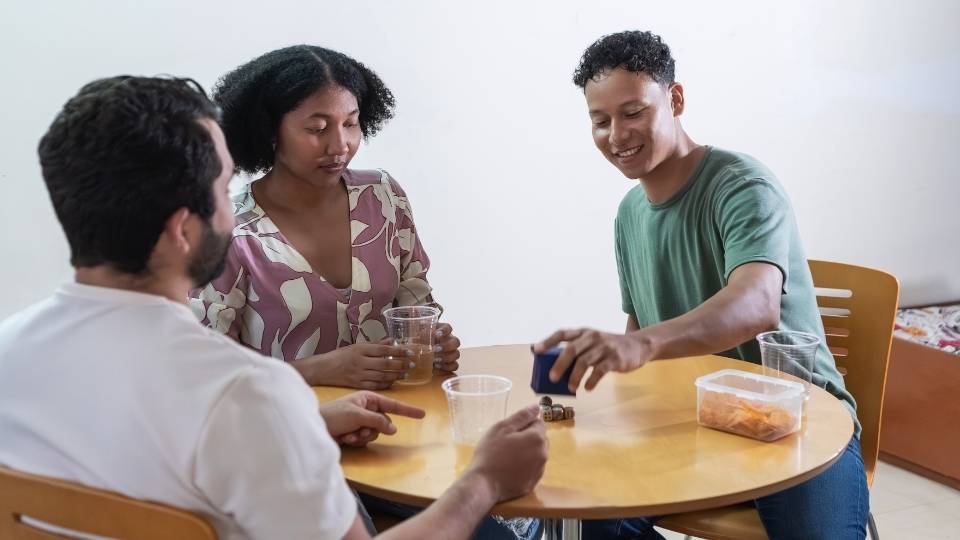
CRAFT stands for Community Reinforcement and Family Training. It was developed by Robert Meyers and colleagues and draws directly from the Community Reinforcement Approach (CRA), a behavioral treatment model rooted in clinical psychology and operant conditioning.
The central idea behind CRAFT is that family members and other close supports are not powerless bystanders. They often play an important role in the environment around substance use, and with the right guidance, they may be able to influence change in meaningful ways.
CRAFT teaches concerned significant others how to:
- communicate more effectively,
- respond in ways that do not unintentionally reinforce substance use,
- reinforce healthier behavior,
- recognize opportunities to encourage treatment,
- and care for their own emotional and physical well-being.
Unlike some approaches that emphasize detachment or do not directly teach treatment-entry skills, CRAFT is active and practical. It gives family members specific tools to use in real-life situations, while also helping them build a more stable and satisfying life of their own.
How CRAFT Compares to Other Approaches
CRAFT is often discussed alongside other ways families respond to addiction, but it is important to compare these approaches carefully.
The disease model of addiction views substance use disorder as a chronic, treatable health condition that may involve medical, psychological, and social support. That framework can help reduce stigma and support treatment. CRAFT does not reject that view. Instead, it adds a behavioral, family-focused strategy for how loved ones can respond in day-to-day life.
Here is a more accurate way to think about the differences:
| Approach | Family’s Role | Main Goal | Notes |
|---|---|---|---|
| CRAFT | Active and skills-based | Increase treatment engagement and improve family well-being | Supported by meaningful research, including trials and review studies |
| Al-Anon or similar family support groups | Supportive and recovery-focused for the family member | Coping, support, acceptance, and boundaries | Widely used; not designed primarily as a treatment-entry method |
| Confrontational interventions | Direct pressure and structured confrontation | Immediate treatment entry | Can be effective in some cases, but may also increase resistance in others |
| General addiction education | Informational | Better understanding of addiction | Useful, but may not by itself produce behavior change at home |
The key difference is that CRAFT focuses on what family members can actively do to support change, rather than only helping them cope or wait.
Does CRAFT work if my loved one refuses to engage?
Yes, and that is one of the main situations CRAFT was designed for. Rather than requiring the person struggling with substance use to participate, it focuses on what you, as a family member, can do in the meantime. Research suggests CRAFT may improve the likelihood of treatment engagement even in cases where the loved one has previously resisted help.
How is CRAFT different from enabling?
Enabling typically means shielding someone from the natural consequences of their substance use in ways that make continued use easier to sustain. CRAFT works in the opposite direction. It helps you recognize and reduce those patterns while reinforcing moments of healthier behavior. The goal is to shift the dynamic at home in ways that support movement toward treatment rather than away from it.
Can CRAFT work alongside other therapies?
Yes. CRAFT can be used alongside individual therapy, support groups, or other clinical supports, particularly when there is consistent guidance from a trained provider. The main consideration is that the different approaches are working in the same direction rather than sending mixed messages. When well coordinated, CRAFT can complement rather than compete with other therapeutic work already underway.
The Three Core Goals of CRAFT

CRAFT is built around three connected goals.
1. Reduce reinforcement for substance use
CRAFT helps family members identify patterns at home that may be unintentionally supporting continued substance use. The goal is not punishment. It is to reduce the rewards connected to using and increase the rewards connected to healthier behavior.
2. Increase the chances of treatment engagement
CRAFT teaches family members how to recognize moments of openness, how to bring up treatment calmly and clearly, and how to make treatment feel more achievable and less threatening.
This does not guarantee that a loved one will say yes right away. But it is designed to improve the chances of movement toward help.
3. Improve the family member’s own quality of life
This is a core part of the model, not an afterthought. Concerned significant others often become exhausted, isolated, anxious, or consumed by the other person’s addiction. CRAFT helps them rebuild functioning, stability, and self-care, which can also make them more effective.
How Positive Reinforcement Works in CRAFT
At the heart of CRAFT is positive reinforcement. In simple terms, behavior followed by rewarding outcomes is more likely to happen again.
CRAFT teaches family members how to apply this principle in daily life. That can include responding more warmly and positively when a loved one is sober, calm, responsible, or open to help, while avoiding patterns that unintentionally reward substance use.
This is not about controlling another person. It is about changing the environment around behavior in a thoughtful, consistent way.
Examples might include:
- expressing genuine appreciation when a loved one comes home sober,
- spending more positive time together when the person is not using,
- planning enjoyable activities that are more likely to happen during sober periods,
- and avoiding emotional escalations during intoxicated episodes.
CRAFT also helps family members stop buffering or rescuing in ways that reduce the natural consequences of substance use. That distinction matters. The goal is not punishment; it is to stop making continued use easier or more comfortable.
Functional Analysis: Understanding the Pattern
One of the core tools CRAFT borrows from the broader CRA model is functional analysis.
Functional analysis is a structured way of looking at a behavior pattern:
- What tends to happen before substance use?
- What does the person seem to get from using in the short term?
- What happens afterward?
- What keeps the pattern going?
This helps family members respond more strategically instead of reacting only out of fear, frustration, or habit.
What a Functional Analysis May Look At
| Component | What to Examine |
|---|---|
| External triggers | Situations, people, places, times of day, or routines that often come before use |
| Internal triggers | Emotions, stress, boredom, physical discomfort, or cravings that may precede use |
| The behavior itself | Which substance is used, how much, how often, and in what context |
| Short-term rewards | Relief, pleasure, escape, social connection, or habit reinforcement |
| Long-term consequences | Relationship strain, financial problems, legal trouble, health decline, work or school impairment |
The point is not to diagnose every moment perfectly. It is to become more observant and deliberate.
Communication Skills and How to Practice Them
Many families dealing with addiction develop communication patterns shaped by fear, resentment, exhaustion, and broken trust. That is understandable. But those patterns are not always effective.
CRAFT places strong emphasis on learning and practicing communication skills that are more likely to keep the door open.
A CRAFT-oriented clinician may help family members practice skills such as:
- making clear, direct requests without blame,
- choosing calm and sober moments for important conversations,
- bringing up treatment in a way that is specific and non-confrontational,
- responding to high-tension situations with more structure and less escalation,
- and rehearsing difficult conversations before they happen.
The goal is not to “win” an argument. It is to communicate in a way that increases the chances of being heard.
Reinforcement, Consequences, and Consistency
CRAFT is built on the idea that consistency matters.
When healthy behavior is reinforced in a warm, reliable way, it becomes more likely to repeat. When substance use is no longer met with rescue, emotional chaos, or unintended rewards, the pattern can begin to shift.
This is one place where CRAFT shares principles with other behavioral strategies, including contingency management, though they are not the same intervention.
In formal treatment settings, contingency management often means structured rewards for verified behavior change, such as abstinence. In family-based CRAFT work, the reinforcement is more personal and relational. It comes through attention, warmth, access to enjoyable experiences, and changes in how family members respond.
One important principle is that inconsistent responses can weaken the process. If a family member sometimes sets a limit and sometimes immediately rescues the person from the result, unwanted behavior may continue just as strongly.
CRAFT and Adolescents
For adolescents and some young adults, a related treatment model called the Adolescent Community Reinforcement Approach (A-CRA) may be relevant.
A-CRA is not simply “CRAFT for teens.” It is an adaptation of the Community Reinforcement Approach for adolescents and young adults, with strong attention to development, peer influence, family functioning, and prosocial activity.
For families dealing with adolescent substance use, clinician-guided family involvement may be especially important. In some cases, family-based strategies inspired by CRAFT may complement youth-focused treatment such as A-CRA, particularly when used by clinicians experienced in working with younger populations.
You May Have More Influence Than You Think
Family members often feel powerless when someone they love is struggling with addiction. CRAFT is built on the premise that close relationships can matter, and that with the right tools, support, and consistency, family members may be able to influence change more effectively than they realize.
That does not mean the process is quick or easy. It often requires patience, planning, and a willingness to look honestly at relationship patterns that have developed over time. It also does not mean family members are responsible for causing or curing addiction.
What it does mean is that they do not have to rely only on pleading, detachment, or exhaustion. There is a structured, evidence-informed way to respond.
Taking the Next Step
If your loved one is struggling with substance use and you are trying to figure out what to do next, CRAFT may be worth exploring with a qualified clinician or treatment program that understands family-based addiction care.
The right support can help you learn practical tools, protect your own well-being, and increase the chances that your loved one eventually says yes to treatment.