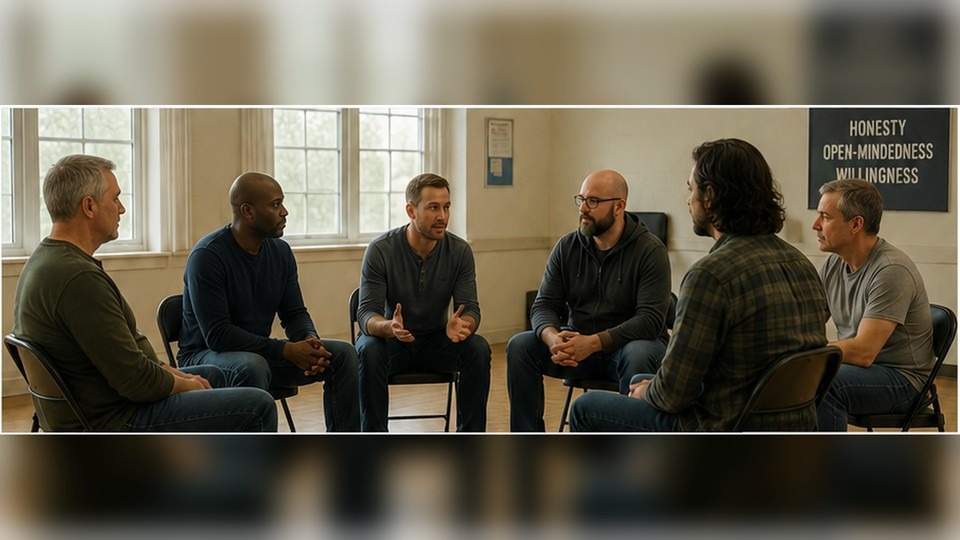
You do not have to believe in God to get sober. Several established 12-step alternatives exist; they are free, and the research says they work about as well as Alcoholics Anonymous does. If the word “God” in the steps has been the thing stopping you from walking into a room, you have options.
This is worth saying plainly from a program that is itself built on 12-step principles. We are not against the steps, and plenty of men find recovery through them. But a program that only works for believers may leave a lot of men without a recovery path, and addiction does not sort itself by spiritual beliefs. Our men’s treatment programs support whichever route actually keeps a man sober.
Do You Have to Believe in God to Do the 12 Steps?

Strictly speaking, no. Six of the twelve steps reference God or a higher power, and AA’s own literature has addressed non-believers since 1939 in the chapter “We Agnostics.” The common workaround among agnostic and atheist AA members is to define the higher power as something other than a deity: the group itself, the experience in the room, reality, or anything larger than your own willpower.
For some men, that reframe works. For others it feels like a linguistic dodge, and pretending otherwise to fit in is its own dishonesty in a program built on rigorous honesty. Both reactions are legitimate.
What matters more than the god part is whether you keep showing up. Recovery is not primarily a belief problem, it is a behaviour problem, and it tends to arrive in stages rather than all at once, which we cover in our piece on how addiction develops from first use to dependence. Any program that gets you into a room with other people doing the same work is doing the structural job. The question is which room you can tolerate weekly for years.
Secular Versions of the 12 Steps
Before abandoning the steps entirely, know that secular rewrites exist. AA Agnostica and Secular AA meetings use versions of the twelve steps with the theological language stripped out, replacing “God as we understood Him” with references to shared experience, honesty, or personal capacity. The nine steps and other condensed rewrites circulate for the same reason.
These keep the parts that do the work, which are inventory, direct amends, accountability, and service, while removing the requirement to believe something you do not. If you like the structure of the steps and not the spiritual principles, a secular meeting of a 12-step fellowship is the shortest distance between where you are and where you want to be. Our overview of how the twelve steps function as a recovery framework explains what that structure is for.
Non-Religious Alternatives to AA
Several established secular mutual-help organizations are available. LifeRing, SOS, and Women for Sobriety emphasize abstinence. SMART Recovery now supports individually chosen goals, including abstinence, moderation, or harm reduction. Moderation Management focuses specifically on helping adults reduce, pause, or change their drinking.
SMART Recovery
SMART Recovery, founded in 1994, is the best established of the alternatives and the one built directly on clinical methods. Its 4-Point Program covers building and maintaining motivation, coping with urges, managing thoughts, feelings and behaviors, and living a balanced life [1].
The philosophy is self-empowerment rather than surrender. SMART states that “the power to change addictive behaviors resides within each individual and does not depend upon adherence to any spiritual viewpoint” [1]. It uses evidence-based methods drawn from cognitive behavioral therapy and motivational enhancement; it does not ask you to call yourself an addict or an alcoholic, and it covers addictive behavior with any substance or activity. Meetings run in person and online internationally, led by volunteers who complete the organization’s own recovery training rather than by clinicians.
If you want a sense of what SMART actually teaches, its urge-management work is the clearest example, and we walk through one of its core techniques in our post on riding out a craving instead of fighting it. The tools are teachable in an hour and usable the same day, which is a large part of the appeal for men who bounced off the steps. Our guide to SMART Recovery covers the program in more depth, including what a first meeting is like.
LifeRing Secular Recovery
LifeRing runs on a 3-S philosophy: Sobriety, Secularity, and Self-Empowerment. It defines sobriety as abstinence from alcohol and other addictive drugs unless medically indicated and taken as prescribed, conducts meetings without prayer or religion out of respect for people of all faiths and none, and holds that recovery is based on self-empowerment, motivation, and individual efforts, with each person deciding what works [2].
LifeRing believes the useful distinction is internal rather than theological: the sober self versus the addict self, and recovery as the work of strengthening the former. It is uncompromising about abstinence and flexible about the route. Meetings focus on the present week rather than on telling your story, and the work is framed as feeding the sober self until it outweighs the other one.
Secular Organizations for Sobriety
SOS grew out of a mid-1980s essay by James Christopher, a writer in long-term recovery who valued AA’s fellowship but could not accept its spiritual framing [3]. It has run as a non religious network of autonomous local support groups ever since. Its organizing principle is the sobriety priority: staying sober is the one thing you will not negotiate, held separate from the other problems in your life.
The self-reliance point is the appeal for a lot of men. In SOS, your sobriety is your own achievement, earned by your own choices and supported by people doing the same work [3]. Meetings are free, anonymous, and peer-led, with no dues and nobody professional running the room.
Women for Sobriety and Moderation Management
Women for Sobriety, founded in 1975 by Jean Kirkpatrick, runs a secular women-only program built around emotional growth and self-awareness rather than powerlessness. Instead of steps it uses 13 acceptance statements, positive affirmations a member works with daily. It belongs on a men’s site because the man reading this often has a partner, sister, or mother who needs a different room than he does.
Moderation Management is the outlier: it supports problem drinkers who want to reduce their drinking rather than commit to complete abstinence. Its nine-step program asks members to keep a drinking diary and set their own limits, and it leaves the choice between moderation and abstinence with the individual. That makes it a poor fit for anyone with physical dependence and a legitimate option for someone whose alcohol abuse has not reached that point. Being honest about which category you are in matters more than which group you choose.
Other Non-Theistic Options
Two more worth knowing about, though neither is strictly secular. Refuge Recovery and Recovery Dharma both use Buddhist principles, meditation, and ethical conduct rather than a deity, which suits men who want a contemplative practice without a God to petition. Harm reduction services are a different category again: they aim to reduce the damage substance use is causing rather than to end it, and they are often the first contact for someone not ready to stop.
What Secular Recovery Programs Have in Common
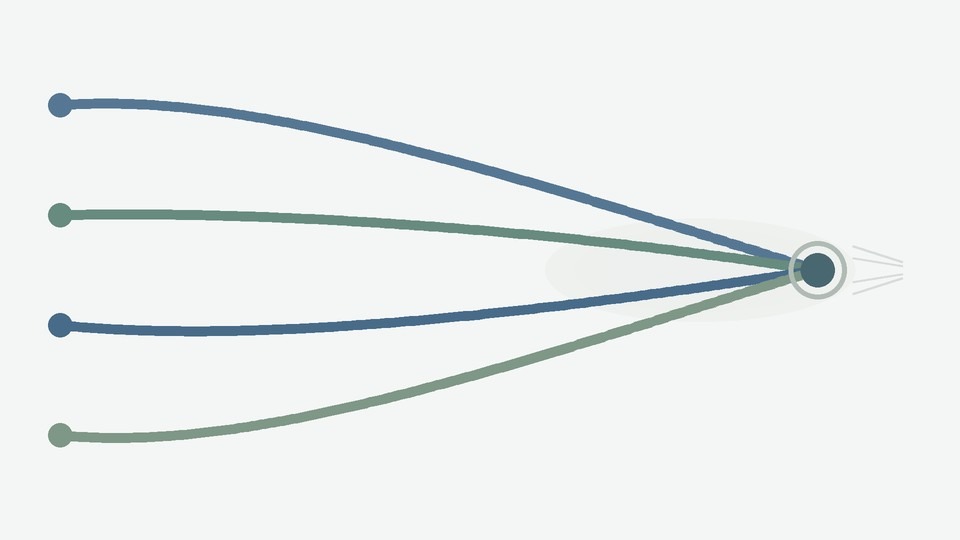
Set the four side by side and the differences shrink. These recovery programs swap the surrender language of traditional programs for self-management: you own the behavior, you own the tools, and personal responsibility carries the weight that a higher power carries in the steps.
The shared machinery is easy to list. There is a regular meeting you are expected at. There is a method for handling cravings in early recovery, when the urge arrives without warning and willpower alone runs thin. There is a running inventory of what sets you off and what to do instead. There is a push toward positive lifestyle changes, which in practice means sleep, work, exercise, and rebuilding healthy relationships with family and friends that drinking or using had hollowed out. And there are other people in the room who know the difference between a hard week and a slip.
That last piece is why self-help in isolation, a book and good intentions, tends to underperform. Mutual support is not a nice extra layered on top of the method; it is part of the method, and its value in addiction research is better documented than any particular philosophy sitting on top of it. A sober life gets built in company. Many people find ongoing peer support valuable, but lasting recovery can be built through several different combinations of clinical care, medication, relationships, mutual-help, and personal behavior change.
Does Secular Recovery Actually Work?
This is the question that matters, and there is real research on the non-religious programs rather than opinion.
A longitudinal study followed 647 adults with lifetime alcohol use disorder across 12 months, comparing Women for Sobriety, LifeRing, SMART Recovery, and 12-step groups. It found no significant differences in efficacy between the alternative mutual support organizations and 12-step groups. Where individual group differences did appear, they became nonsignificant once the researchers controlled for participants’ baseline recovery goal, suggesting the differences reflected participant motivation rather than any group working better than another [4].
Read that in both directions. It does not mean the 12 steps do not work; they clearly do for a great many people. It means the mechanism producing successful long-term recovery is not the theology. It is regular attendance, mutual support, honesty, and accountability, and each of these groups supplies those.
Two things follow. You can stop treating your inability to accept a higher power as a verdict on whether recovery is available to you. And group fit is worth taking seriously rather than settling for the first meeting you find, because relapse rates are affected by whether you keep going, and you keep going to rooms you do not dread. Length of stay in treatment follows similar logic, which we cover in our post on how long drug rehabilitation actually takes.
Secular Options for Alcohol Addiction and Other Substances
The secular field grew up around alcohol. Alcoholics Anonymous came first, the alternatives formed in reaction to it, and the literature for LifeRing, SOS, and Women for Sobriety still speaks mainly to people trying to quit drinking. If alcohol is your substance, you have the widest choice of rooms.
SMART Recovery is the broadest of the four. It treats addictive behavior as one problem with many objects, so the same 4-Point method applies to alcohol, opioids, stimulants, gambling, and other substances, and its meetings mix people whose drugs of choice have nothing in common. That matters for men whose use never stayed in one lane.
Two cautions. A secular group is peer support, not alcohol treatment. If you drink daily and heavily, unsupervised withdrawal carries seizure risk, and detox belongs under medical supervision before any meeting schedule matters. Medication-assisted treatment, using medications approved by Health Canada alongside counseling, is also available for alcohol and opioid use and is compatible with any of these groups. And alcohol abuse often sits on top of untreated mental health issues, which support groups are not built to treat. Clinical alcohol addiction treatment and a weekly secular meeting are not competing treatment options; they solve different halves of the problem. The men who hold onto sobriety tend to have both in place rather than one. If you are still working out where alcohol sits pharmacologically, our piece on whether alcohol is a stimulant or a depressant covers that ground.
Finding Secular Support in Canada
Access in Canada is thinner than in the US and varies by province. SMART Recovery has the widest Canadian footprint of the secular groups, with in-person meetings across BC and online meetings that make geography irrelevant. LifeRing and SOS run mostly online here.
Some Canada-wide numbers if you are starting from nothing: Drug Rehab Services can provide referrals at no cost at 1-877-254-3348, and Narcotics Anonymous can be reached at 1-855-562-2262. For Indigenous callers, the Hope for Wellness Help Line offers multilingual crisis support at 1-855-242-3310 [5]. Each province and territory runs its own substance use services, and BC’s are listed on the same federal page.
Online meetings carry particular weight for men in smaller BC communities. If the nearest in-person secular group is three hours away, an online room you attend weekly beats an in-person room you attend twice.
Choosing Your Own Path
Try more than one. Meetings vary more by room than by organization, and a bad first meeting says more about that group of people on that night than about the program. Give any group three sessions before deciding.
Mixing is allowed, and nobody polices it. Plenty of men attend both a 12-step meeting and a SMART meeting, taking the fellowship from one and the evidence-based tools from the other. Not everyone needs the same intensity either, and a schedule that fits your week is worth more than an ambitious one you abandon. The evidence across the field points the same way: several recovery approaches work, and no single model works for everyone.
Groups are not treatment. Peer support is the maintenance layer, not the clinical one. If you are physically dependent, withdrawal needs medical supervision first, and a co-occurring condition needs treating in its own right. Depression that arrived with a life event behaves differently from depression that has always been there, a distinction we cover in our post on situational depression and how it differs from clinical depression.
Cannabis is the other blind spot, because men often do not count it as part of the picture. Whether it even qualifies as addictive is a question we take on in our look at how weed is classified.
Family needs its own support. The people around you are carrying something too, and family support groups exist for that.
Where We Fit
Into Action Recovery has run men’s programs across Canada since 2012, built on 12-step principles, and the steps are central to what we do. We have also watched men arrive who could not stomach the higher power language and get sober anyway, using the fellowship, the structure, the physical work, and the accountability of other men while quietly setting the theology aside. They rebuilt their lives on the parts of the program that were never spiritual to begin with.
Our residential treatment in British Columbia combines clinical work, twelve-step fellowship, physical conditioning, and a group of men who will hold you to what you said you would do. Whether a man privately calls the higher power God, the group, or nothing at all has not been the thing that separates the men who stay sober here from the men who do not. We have also written about how the steps hold up for opioid recovery specifically, where the evidence question comes up often.
Call us and ask directly. If a secular group is the better fit for you, we will say so.
12-Step Alternatives Frequently Asked Questions
Can You Do AA as an Atheist?
Yes, and many do. The usual approach is defining the higher power as something non-divine, such as the group, or attending a secular AA or AA Agnostica meeting that uses reworded steps. AA’s own literature has addressed non-believers since its first edition.
Is There a Non-Religious Version of the 12 Steps?
Several. Secular rewrites replace the references to God with shared experience, honesty, or personal capacity while keeping inventory, amends, and service intact. AA Agnostica publishes the best-known versions.
What Are the Best Alternatives to Alcoholics Anonymous?
SMART Recovery has the strongest evidence base and the widest Canadian availability. LifeRing and SOS are both secular and abstinence-based. Women for Sobriety serves women specifically. Moderation Management is for reducing rather than stopping, which makes it unsuitable for physical dependence.
Which of the 12 Steps Is the Hardest?
Members commonly name the fourth, the searching moral inventory, and the ninth, making direct amends. Neither of those requires belief in God, which is part of why some men keep the steps and drop the theology.
Can I Do the 12 Steps by Myself?
You can read and work them alone, and some people do. The consistent finding across these programs is that the group component is doing much of the work, so solo step work plus no meetings is the weakest version of any of these approaches.
Are Secular Recovery Groups Evidence-Based?
SMART Recovery is the clearest case: its methods come from cognitive behavioral therapy and motivational enhancement, and the comparative research found no efficacy gap against 12-step groups. The others have less research behind them individually. The active ingredient the four share, regular mutual support, is among the better documented findings in addiction recovery.
Do I Need Treatment, or Is a Group Enough?
Support groups are free and they help, but they are not clinical care. If you have physical dependence, a history of withdrawal seizures, or a co-occurring condition, start with addiction treatment and use the group as the ongoing layer afterward. Many treatment programs, ours included, expect a man to be in some kind of weekly support group once he leaves.
Sources
- SMART Recovery. About Us. https://smartrecovery.org/about-us
- LifeRing Secular Recovery. https://lifering.org/
- Addiction Help. Secular Organizations for Sobriety. https://www.addictionhelp.com/recovery/secular-organizations-for-sobriety/
- Zemore SE, Lui C, Mericle A, Hemberg J, Kaskutas LA. A longitudinal study of the comparative efficacy of Women for Sobriety, LifeRing, SMART Recovery, and 12-step groups for those with AUD. Journal of Substance Abuse Treatment. https://www.jsatjournal.com/article/S0740-5472(17)30490-7/fulltext
- Government of Canada. Get help with substance use. https://www.canada.ca/en/health-canada/services/substance-use/get-help-with-substance-use.html